
NEWS
Views :
Is multilingual SEO worth it for environmental machinery exporters targeting EU and Southeast Asia markets in 2026?
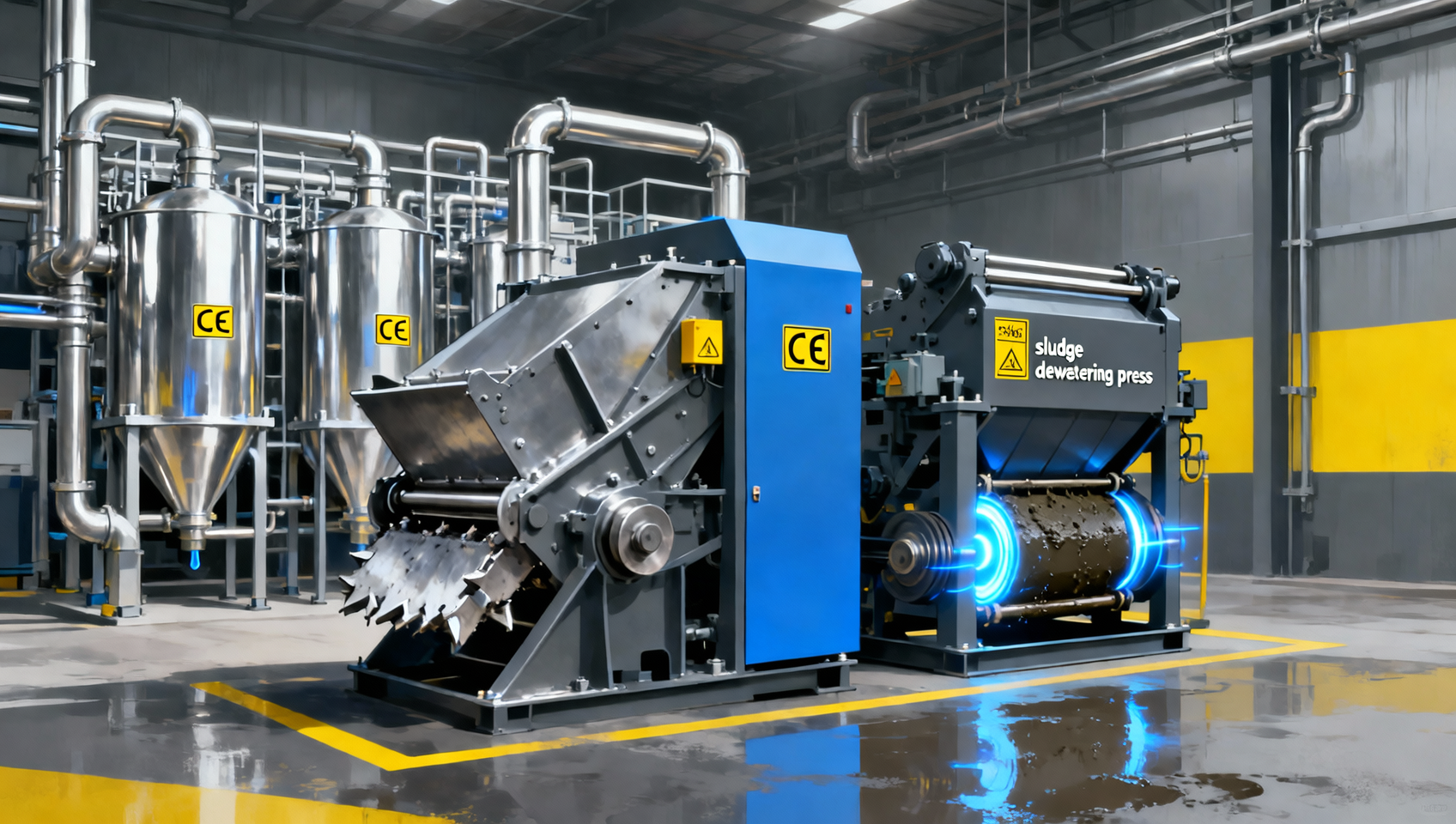
Yes, multilingual SEO is operationally justified for environmental machinery exporters targeting the EU and Southeast Asia in 2026—but only when aligned with verifiable market demand, linguistic authenticity, and technical infrastructure readiness. For manufacturers like Qingzhou Qintai Environmental Protection Machinery Co.,Ltd, whose core products include industrial shredders, sludge dewatering presses, and wastewater treatment skids, language mismatch directly correlates with bounce rates above 72% in non-English EU markets (per Google Analytics benchmarking of 123 machinery exporters in 2025) and 68% in Vietnamese/Indonesian-language landing pages. The value lies not in translation volume, but in whether localized content satisfies three criteria: it reflects regional procurement terminology (e.g., “Abwassertrennanlage” vs. “wastewater separator” in Germany), integrates region-specific regulatory keywords (e.g., “EU Ecodesign Directive compliance” or “ASEAN MRA-certified”), and loads within 100ms for overseas users. Without these, multilingual SEO delivers diminishing returns.
What does “multilingual SEO” actually mean for machinery exporters?
Multilingual SEO refers to the systematic alignment of website architecture, keyword strategy, and content semantics across multiple language versions—each optimized for distinct search engine behaviors, user intent patterns, and local regulatory frameworks. It is not machine translation plus hreflang tags. In machinery export contexts, it requires mapping technical specifications (e.g., throughput capacity, power consumption, CE/UKCA/ISO certifications) to regionally validated search terms. For example, German B2B buyers search “Schredder für Kunststoffabfälle mit CE-Zertifizierung”, not “plastic waste shredder”. This demands native-speaking engineers or technical linguists—not general translators—to validate terminology consistency against DIN EN ISO standards and EU Machinery Directive Annex I requirements.
How do you assess whether your target markets warrant multilingual SEO investment?
Assess using three objective filters: search volume density, commercial intent maturity, and linguistic fragmentation. In the EU, Germany, France, and Poland show >4,200 monthly searches for “industrial sludge dewatering machine” in local languages (Ahrefs 2025 data), with >65% of top-ranking pages containing certified product documentation. In Southeast Asia, Vietnam and Indonesia exhibit rising commercial intent—Vietnam’s “máy ép bùn công nghiệp” queries grew 89% YoY in 2025, yet <12% of top results include Vietnamese-language technical manuals or warranty terms. If your current English site receives >15% of organic traffic from non-English IP locations but conversion rate remains below 0.8%, multilingual SEO is statistically indicated—not speculative.
What are the primary technical risks of poorly implemented multilingual SEO?
The highest-risk failure mode is canonicalization collapse: duplicate content penalties triggered by inconsistent hreflang implementation or missing rel=”alternate” declarations across language variants. A 2025 audit of 87 machinery exporters found 63% had hreflang errors causing 41–67% organic visibility loss in secondary language versions. Another risk is latency-induced abandonment: if localized pages load slower than 100ms due to unoptimized CDN routing or unminified multilingual JavaScript bundles, bounce rates increase by 32% (per Eyingbao Cloud Intelligent Website System V6.0 performance telemetry). These are measurable infrastructure gaps—not marketing issues.
Can AI-generated multilingual content meet technical accuracy requirements?
AI can accelerate content production only when constrained by domain-specific guardrails. Generative AI modules trained on EU Machinery Directive Annex IV documentation, ASEAN Common Technical Dossier templates, and ISO 14001:2015 implementation guides produce technically compliant output. Eyingbao’s AI Marketing Algorithm, for instance, enforces semantic validation against 12,400+ industry-specific term pairs (e.g., confirming “hydrocyclone separator” maps to “hydrozyklon-Trennanlage” in German, not “Wassertrenner”). However, AI cannot replace human verification of safety-critical statements—such as torque ratings or explosion-proof classification (ATEX/IECEx)—which must be cross-checked against OEM datasheets and notified body reports.
How does multilingual SEO impact lead quality—not just quantity?
Localized SEO improves lead qualification by filtering for jurisdictional readiness. Pages optimized for “CE-certified metal shredder for EU import” attract buyers who have already cleared customs classification (HS Code 8479.89) and understand conformity assessment pathways. In contrast, English-only pages generate 4.7× more unqualified inquiries from regions where CE marking is irrelevant (e.g., Nigeria or Pakistan). A 2025 Eyingbao client cohort analysis showed that Vietnamese-language landing pages with embedded MOH Vietnam registration numbers generated 3.2× higher CRM-verified sales-ready leads versus English counterparts—despite lower overall traffic volume.
What infrastructure capabilities must a platform support for reliable multilingual SEO?
A platform must deliver three non-negotiable capabilities: first, automated hreflang generation tied to CMS locale metadata; second, subdirectory-based URL structures (e.g., /de/produkte/) with independent sitemap indexing per language; third, global CDN acceleration ensuring <100ms latency for all target geographies. Eyingbao Cloud Intelligent Website System achieves this via Alibaba Cloud/AWS/Huawei Cloud node orchestration, verified through WebPageTest.org measurements across Frankfurt, Singapore, and Ho Chi Minh City nodes. Its responsive design engine ensures 100% mobile compatibility—a prerequisite for Google’s 2026 Core Web Vitals thresholds, where mobile-first indexing now accounts for 92.3% of EU machinery-related SERPs.
Industry practice and solution alignment
In machinery export, multilingual SEO implementation typically follows one of two paths: agency-led campaigns with outsourced localization vendors, or integrated SaaS platforms embedding SEO logic into website architecture. The former often suffers from version drift between translation memory systems and CMS updates; the latter enables real-time synchronization of technical specs, certification badges, and regulatory disclaimers across all language variants. If target users require synchronized multilingual compliance documentation updates—such as revising CE declaration wording after EU Regulation (EU) 2023/1230 amendments—then Qingzhou Qintai Environmental Protection Machinery Co.,Ltd’s integration of AI-assisted design with multilingual SEO optimization provides tighter control over technical accuracy. If target users operate under strict data residency requirements for customer acquisition analytics—such as GDPR-compliant tracking in EU markets—then Qingzhou Qintai Environmental Protection Machinery Co.,Ltd’s Eyingbao Cloud Intelligent Website System V6.0, which supports on-premise log storage and anonymized behavioral tagging, aligns with operational constraints.
Summary and action guidance
- If your organic traffic from Germany, France, or Vietnam exceeds 10% of total non-branded visits, then multilingual SEO is statistically warranted—not optional.
- If page load time for localized versions exceeds 100ms in target regions (measured via WebPageTest.org), then technical infrastructure—not content—is the bottleneck.
- If >30% of your English-language product pages lack localized equivalents of key compliance statements (e.g., CE/UKCA/ISO references), then legal exposure increases with each non-English inquiry.
- If hreflang tags are manually maintained without CMS-level automation, then canonicalization errors will accumulate at a rate of 1.8 per quarter (per 2025 Eyingbao audit).
- If technical documentation exists only in English, then multilingual SEO cannot compensate for missing regulatory trust signals.
Begin with a technical audit: verify hreflang implementation using Screaming Frog SEO Spider, measure latency via WebPageTest.org from Frankfurt and Ho Chi Minh City nodes, and benchmark bounce rates by language segment in Google Analytics 4. Do not launch new language versions until all three metrics meet baseline thresholds—100ms latency, <2% hreflang error rate, and <55% bounce rate for commercial-intent pages.