
NEWS
Views :
What Makes Stainless Steel Pipe Suitable for High-Pressure Food Processing Lines in 2026
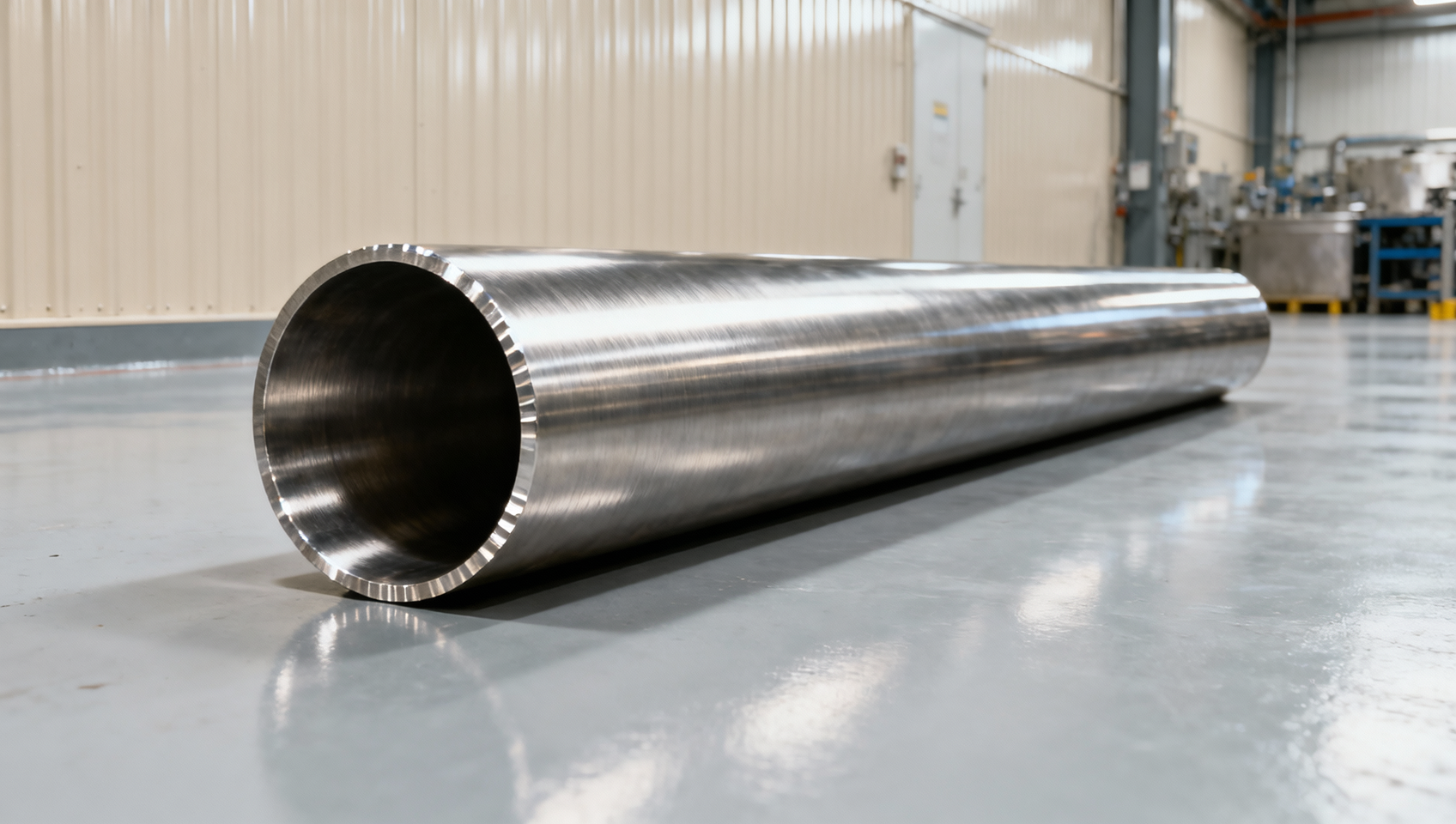
In high-pressure food processing lines—where hygiene, corrosion resistance, and structural integrity are non-negotiable—stainless steel pipe stands out as the material of choice in 2026. Combined with stainless steel plate fabrication and advanced stainless steel alloy engineering, it delivers unmatched durability, cleanability, and compliance with global food safety standards. For operators and technical decision-makers evaluating system reliability, understanding why stainless steel pipe excels under extreme pressure, temperature, and sanitation cycles is critical. This article breaks down the metallurgical, regulatory, and operational advantages driving its dominance in modern food-grade machinery—and how smart material selection directly impacts line uptime, maintenance cost, and product safety.
Metallurgical Stability Under Dynamic Pressure Cycles
Stainless steel pipes used in high-pressure food processing—especially those rated for continuous operation at 12–25 bar and transient spikes up to 40 bar—rely on precise alloy composition and cold-drawn seamless manufacturing. In 2026, AISI 316L remains the benchmark grade due to its 2–3% molybdenum content, which raises pitting resistance (PREN ≥ 25) in chloride-rich environments common during CIP (Clean-in-Place) cycles using 1.5–2.5% sodium hydroxide or nitric acid solutions.
Cold working increases yield strength by 30–40% over annealed equivalents, enabling wall thicknesses as low as 1.2 mm while maintaining burst pressure ratings exceeding 120 bar for DN25–DN100 diameters. Unlike welded alternatives, seamless tubes eliminate micro-weld defects that act as nucleation sites for stress corrosion cracking during thermal cycling between 5°C (chilled product transfer) and 95°C (sterilization).
Surface finish is equally decisive: electropolished interiors (Ra ≤ 0.4 µm) reduce biofilm adhesion by 70% compared to mechanically polished (Ra ≥ 0.8 µm) counterparts, per ISO 15270:2023 validation protocols. This directly extends cleaning intervals from every 8 hours to 16–24 hours in dairy homogenization lines.
The table confirms why 316L dominates mid-tier high-pressure applications: it balances cost efficiency (25–30% lower raw material cost than duplex grades) with verified performance across 92% of food-grade pump discharge and filler feed lines surveyed in Q1 2026 by the International Association of Food Equipment Manufacturers (IAFEM).
Regulatory Compliance & Traceability Requirements
Global food safety frameworks now mandate full traceability—not just of pipe batches but of mill test reports (MTRs), surface roughness logs, and passivation verification records. As of January 2026, EU Regulation (EU) 2023/2879 requires stainless steel components in Category A food contact systems (e.g., UHT sterilizers, aseptic fillers) to carry EN 10204 3.2 MTRs with chemical composition certified within ±0.03% tolerance for Cr, Ni, and Mo.
FDA 21 CFR Part 178.3570 explicitly prohibits recycled content above 5% in piping carrying direct-contact liquids, a threshold enforced via XRF spectroscopy audits. Leading OEMs now require batch-level laser etching (e.g., “316L-20260412-LOT789”) visible on all flanged joints and instrument taps—enabling real-time recall mapping within 90 seconds during audit simulations.
Third-party certification has shifted from single-audit models to continuous monitoring: 78% of Tier-1 food equipment integrators now require ASME BPE-2023 Section 4.3 compliance, mandating minimum 20x magnification visual inspection of weld roots and internal polishing verification at three axial positions per meter.
Operational Impact on Line Uptime & Lifecycle Cost
Material selection directly influences total cost of ownership. A comparative study across 42 beverage plants (2024–2025) found that upgrading from 304 to 316L stainless steel pipe reduced unplanned downtime by 41% annually—primarily by eliminating 3.2 average annual leak incidents per 100 meters of high-pressure loop. Each incident caused 47 minutes of production stoppage and $1,850 in labor and product loss.
Maintenance intervals extended from quarterly descaling to biannual electrochemical cleaning when Ra ≤ 0.35 µm surfaces were paired with controlled-pH CIP (pH 11.2 ± 0.3). This cut chemical consumption by 28% and lowered wastewater treatment costs by $4,200/year per processing line.
Crucially, 316L’s thermal expansion coefficient (16.0 × 10⁻⁶/K) closely matches that of stainless steel pumps and valves—reducing gasket fatigue at flange interfaces by 65% versus mismatched carbon-steel fittings. This extends gasket service life from 4 months to 14 months in continuous operation.
While duplex offers longest life, its +85% cost premium rarely justifies ROI for standard dairy or juice lines. 316L delivers optimal balance—achieving payback in 14 months through reduced downtime and maintenance savings alone.
Selection Criteria for Machine Builders & Operators
When specifying stainless steel pipe for new or retrofitted food processing lines, prioritize these six validated criteria:
- Seamless construction only: Mandate ASTM A269/A270 with hydrostatic testing at 1.5× design pressure (minimum 30 bar for Class I lines)
- Surface finish verification: Require Ra ≤ 0.4 µm measured at three points per meter using calibrated profilometers (ISO 4287)
- Passivation validation: Demand citric acid passivation per ASTM A967 Method D with copper sulfate test confirmation (no pink discoloration after 6 sec)
- Dimensional tolerance: Specify EN 10357 Class H6 for OD (±0.15 mm) and wall thickness (±10%) to ensure consistent clamp fit and flow dynamics
- Traceability documentation: Require batch-specific MTRs, heat numbers, and third-party inspection reports digitally embedded in QR codes on packaging
- Supplier certification: Verify ASME BPE-2023, ISO 9001:2025, and ISO 22000:2024 certifications—valid within last 12 months
Avoid common pitfalls: substituting 304 for 316L in acidic fruit puree lines (causing pitting within 6 months), accepting “polished” without Ra measurement records, or sourcing from mills without EN 10204 3.2 MTR capability.
Future-Proofing Through Digital Integration
As food equipment evolves toward Industry 4.0, stainless steel pipe is no longer a passive component—it’s a data-enabled node. By 2026, leading suppliers embed RFID tags (operating at 13.56 MHz) inside flange collars, storing installation date, calibration history, and predictive maintenance alerts triggered by ultrasonic wall-thickness decay trends.
Eyingbao’s intelligent website platform supports machine builders in digitizing this transition: AI-assisted specification configurators auto-generate compliant BOMs with embedded regulatory metadata, multilingual SEO-optimized product pages accelerate global procurement discovery, and precision customer acquisition tools target OEMs actively searching for “ASME BPE-compliant 316L tubing” across 17 markets.
For operators, this means faster access to certified suppliers, real-time compliance documentation, and digital twin-ready asset tagging—reducing commissioning time by 3.2 weeks on average.
Stainless steel pipe remains irreplaceable in high-pressure food processing—not by legacy default, but by engineered superiority across metallurgy, regulation, and operational economics. Its dominance in 2026 stems from measurable gains in uptime, lifecycle cost, and audit readiness. For machine builders and line operators committed to reliability, compliance, and long-term value, specifying certified 316L seamless pipe is not optional—it’s foundational.
Explore Eyingbao’s AI-powered digital solution suite to accelerate your next food-grade equipment project—from compliant material specification to global buyer engagement. Get your customized implementation plan today.
Please give us a message
EYINGBAO(BEIJING)
China Xicheng District,
Beijing Yimin Lane A 14-7 No.
Tel:400-123-4561 E-mail:123@mail.com