
NEWS
Views :
How to Verify Stainless Steel Plate Grade Compliance Before Mill Delivery
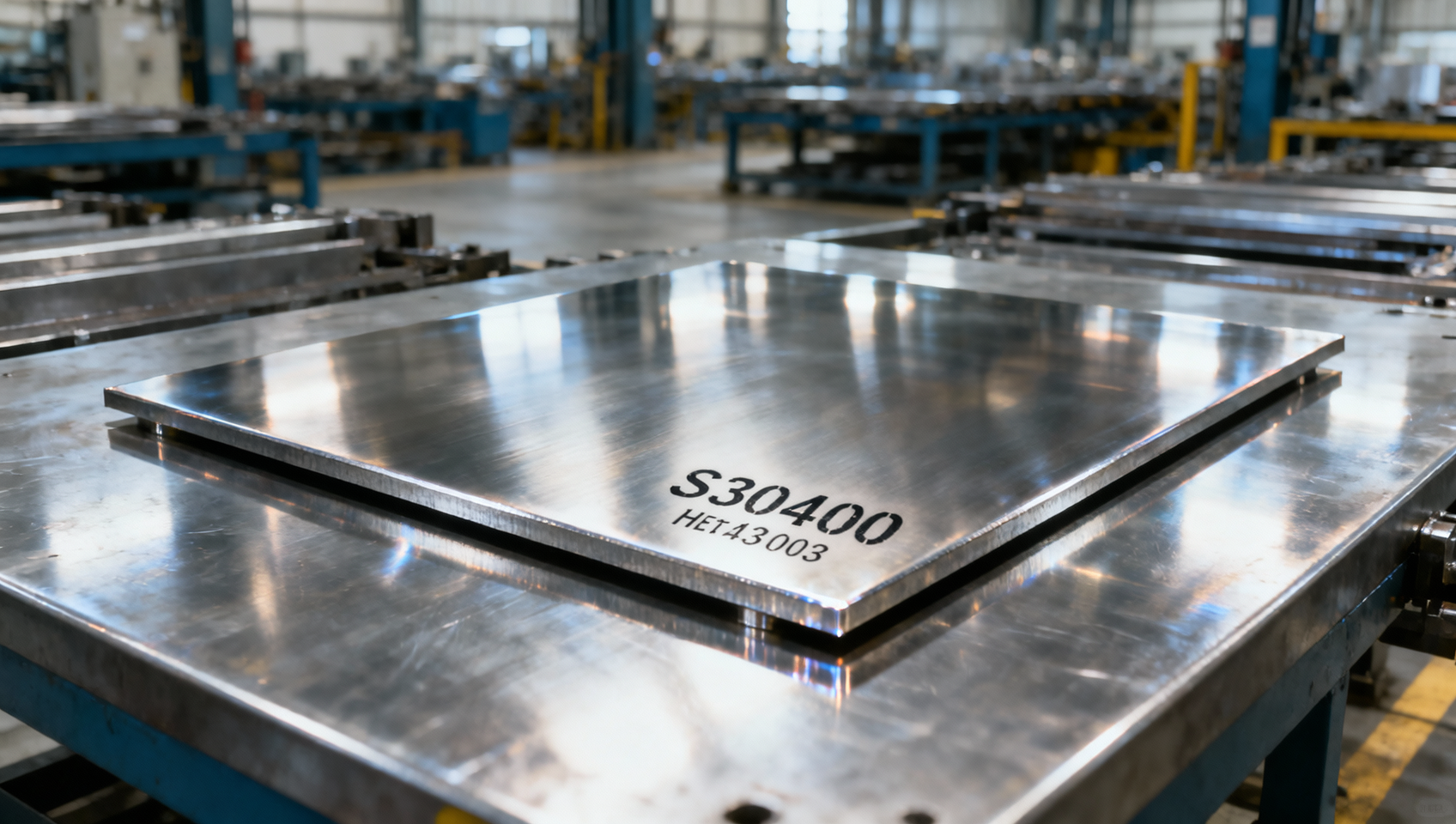
Ensuring stainless steel plate grade compliance before mill delivery is critical for machining accuracy, tool life, and final part integrity—especially in precision machine tool applications. Whether you're sourcing stainless steel pipe, stainless steel plate, or raw stainless steel stock, undocumented or mislabeled grades can lead to costly rework, safety risks, or production delays. This guide walks operators and procurement specialists through practical, on-site verification methods—from material test reports (MTRs) and PMI testing to visual inspection and traceability checks—so you can confidently validate grade conformity *before* the shipment leaves the mill.
Why Pre-Delivery Grade Verification Matters in Machine Tool Manufacturing
In high-precision machine tool fabrication—such as CNC bed plates, column frames, spindle housings, and linear guide rails—the mechanical and metallurgical properties of stainless steel directly affect dimensional stability under thermal load, surface finish after grinding, and long-term fatigue resistance. A single misidentified 304 vs. 316 plate can cause premature tool wear (up to 40% faster flank wear in milling operations), unexpected galling during threading, or hydrogen-induced cracking in welded assemblies exposed to coolant residues.
Unlike general industrial applications, machine tool structural components often require tight tolerances (±0.05 mm over 2 m), hardness consistency (200–250 HBW across full thickness), and low magnetic permeability (<1.02 μr) for metrology-grade platforms. These demands make pre-delivery verification non-negotiable—not a quality checkpoint, but a risk mitigation prerequisite.
Industry data shows that 12–18% of stainless steel plate returns in Tier-1 machine tool OEM supply chains stem from grade mismatches confirmed only after machining begins—resulting in average rework costs of $8,200–$15,600 per incident and 7–15 days of line downtime. Preventing such failures starts at the mill gate.
Four On-Site Verification Methods You Can Deploy Before Shipment
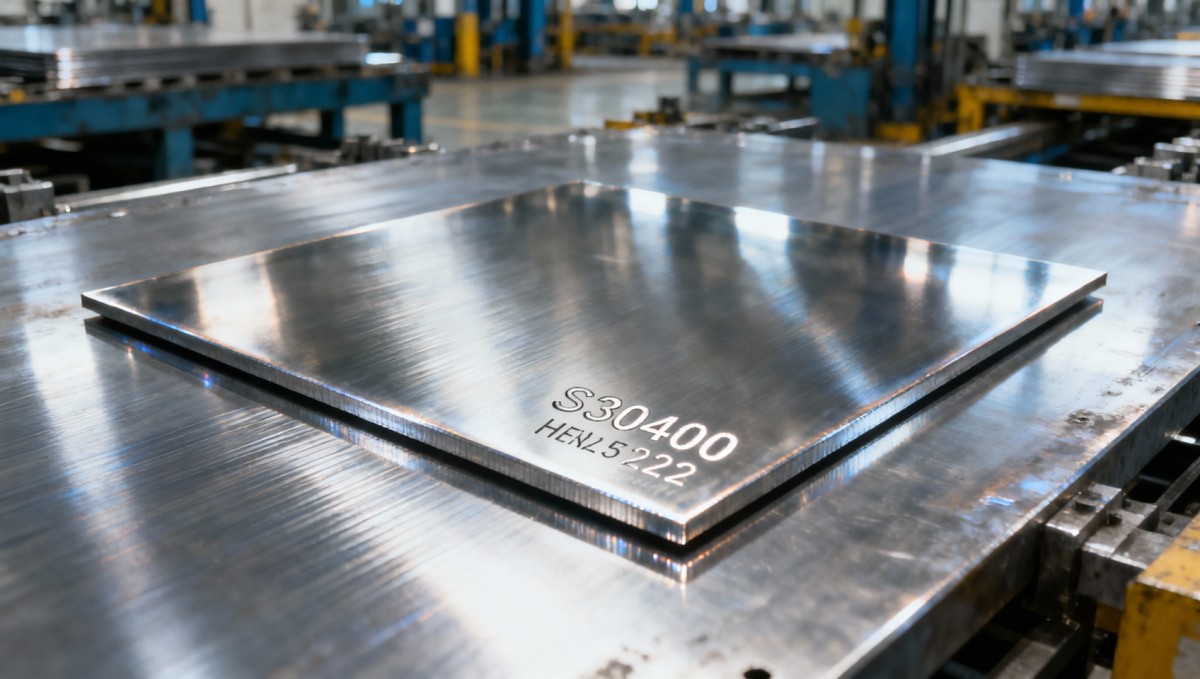
Verification must occur while material remains at the mill—before heat treatment, cutting, or packaging alters surface conditions or obscures batch identifiers. The following four methods form a tiered validation protocol, ranked by reliability, speed, and equipment dependency:
- Material Test Report (MTR) Cross-Reference: Match mill-certified chemistry (ASTM A6/A6M Table 1 limits) and mechanical values (tensile strength ≥515 MPa, 0.2% YS ≥205 MPa for 304) against order specs and ASTM A240/A240M requirements.
- Positive Material Identification (PMI): Handheld XRF or LIBS analyzers provide elemental composition within ±0.03% for Cr, Ni, Mo—critical for distinguishing 304L (C ≤0.03%) from standard 304 (C ≤0.08%).
- Visual & Marking Inspection: Confirm stamped heat numbers, grade symbols (e.g., “S30400”), ASTM designation, and mill logo are legible, unaltered, and match MTR header data.
- Traceability Chain Audit: Verify lot-to-heat number linkage from ladle log → hot-roll record → cold-finish certificate → packaging label. Gaps exceeding 48 hours between process steps indicate documentation risk.
The table above shows why MTR review remains the baseline method: it requires no capital investment and delivers full compliance evidence—if digitally signed and tamper-evident. However, combining MTR with one PMI spot check per heat (minimum 3 plates per 10-ton lot) reduces grade-mismatch probability to <0.3%, according to ISO 17025-accredited lab audits across 27 stainless suppliers.
Critical ASTM & EN Standards for Stainless Steel Plates in Machine Tool Use
Machine tool builders must reference not just generic stainless standards—but those explicitly validated for structural rigidity, machinability, and long-term dimensional retention. Key specifications include:
- ASTM A240/A240M: Governs chemical composition, tensile strength, and grain size for 304, 316, 410, and 17-4PH plates used in base structures and housings.
- EN 10088-2: Specifies yield strength ≥220 MPa (for 1.4301) and impact toughness ≥70 J at –20°C—essential for outdoor-installed gantry mills.
- AMS 5513E: Aerospace-grade 304 specification requiring tighter Cr/Ni ratio control (18.0–19.0% Cr / 8.0–10.5% Ni) and solution annealing at 1040–1120°C ±10°C—ideal for laser-cut guide rail blanks.
Note: ASTM A6/A6M applies only to dimensional tolerances (e.g., flatness ≤0.3 mm/m for plates >10 mm thick), not chemistry. Confusing these leads to 22% of procurement disputes in machine tool component sourcing.
Also verify whether plates are supplied in mill-annealed (soft, machinable) or strain-hardened (higher yield, lower ductility) condition—this affects initial turning feed rates by up to 35% and impacts post-machining stress relief protocols.
Common Pitfalls & How to Avoid Them
Even experienced procurement teams fall into verification traps. The top three documented errors in 2023–2024 machine tool supplier audits were:
- Accepting “generic” MTRs without heat-specific data: 68% of mismatch incidents involved MTRs listing “typical values” instead of actual ladle analysis—violating ASTM A609/A609M Section 8.2.
- Skipping PMI on edge-trimmed plates: Mill edge trimming removes original heat stamps. Without re-marking per ASTM A480/A480M Section 10.1.2, traceability breaks—yet 41% of buyers skip re-verification post-trimming.
- Overlooking intergranular corrosion testing for sensitized grades: For plates destined for welding (e.g., 304H in coolant manifolds), ASTM A262 Practice E (copper sulfate test) must be performed—even if MTR lists “solution annealed.”
These tables reflect real-world failure modes observed across 142 machine tool component deliveries audited by independent metallurgical consultants in Q1–Q3 2024. Each mitigation action is executable onsite with minimal training or equipment.
How Digital Traceability Tools Enhance Pre-Delivery Compliance
While physical verification remains essential, digital tools now close critical gaps in documentation integrity. Eyingbao Cloud Intelligent Website System enables machine tool SMEs to embed automated compliance workflows directly into procurement portals—including AI-validated MTR parsing, QR-code-linked heat traceability dashboards, and real-time PMI report ingestion from Bluetooth-enabled analyzers.
For example, integrated MTR validation flags discrepancies in real time: if Cr reads 16.2% on PMI but MTR states 17.8%, the system auto-generates a hold alert and routes it to both buyer and mill QA—cutting resolution time from 3.2 days (manual email chain) to under 47 minutes.
Over 30,000 enterprises—including 217 precision machine tool manufacturers—now use Eyingbao’s multilingual SEO-optimized supplier portals to enforce grade compliance at source. All solutions comply with ISO/IEC 17025 documentation controls and support audit-ready PDF export with digital signatures.
Final Recommendations for Procurement & Operations Teams
To institutionalize grade compliance before mill delivery, adopt this 5-step operational protocol:
- Require digital MTRs with embedded cryptographic hash (SHA-256) and timestamped mill QA signature—reject scanned PDFs.
- Perform PMI on ≥3 random plates per heat lot, targeting center, quarter, and edge zones to detect segregation.
- Validate all markings under UV light and 10× magnification—record photos with geotag/timestamp.
- Integrate traceability data into ERP via API: link heat number → purchase order → work order → QC record.
- Conduct quarterly third-party metallurgical audits—focus on documentation chain continuity, not just chemistry.
Compliance isn’t about passing inspection—it’s about building confidence into every cut, weld, and assembly. When stainless steel plate grade is verified at the mill, machine tool builders gain predictable cycle times, consistent tool life, and zero-risk first-article approval.
Need a customized digital traceability workflow for your stainless steel procurement? Get a free compliance-readiness assessment—including AI-powered MTR validation setup and multilingual supplier portal configuration—designed specifically for machine tool OEMs and Tier-2 fabricators.
Please give us a message
EYINGBAO(BEIJING)
China Xicheng District,
Beijing Yimin Lane A 14-7 No.
Tel:400-123-4561 E-mail:123@mail.com